Master students created promotional films for Runde Research: – A unique learning arena
Master in Media Practices students at Volda University College have gained highly relevant practical experience this autumn and are receiving praise for the promotional films they produced for Runde Research.
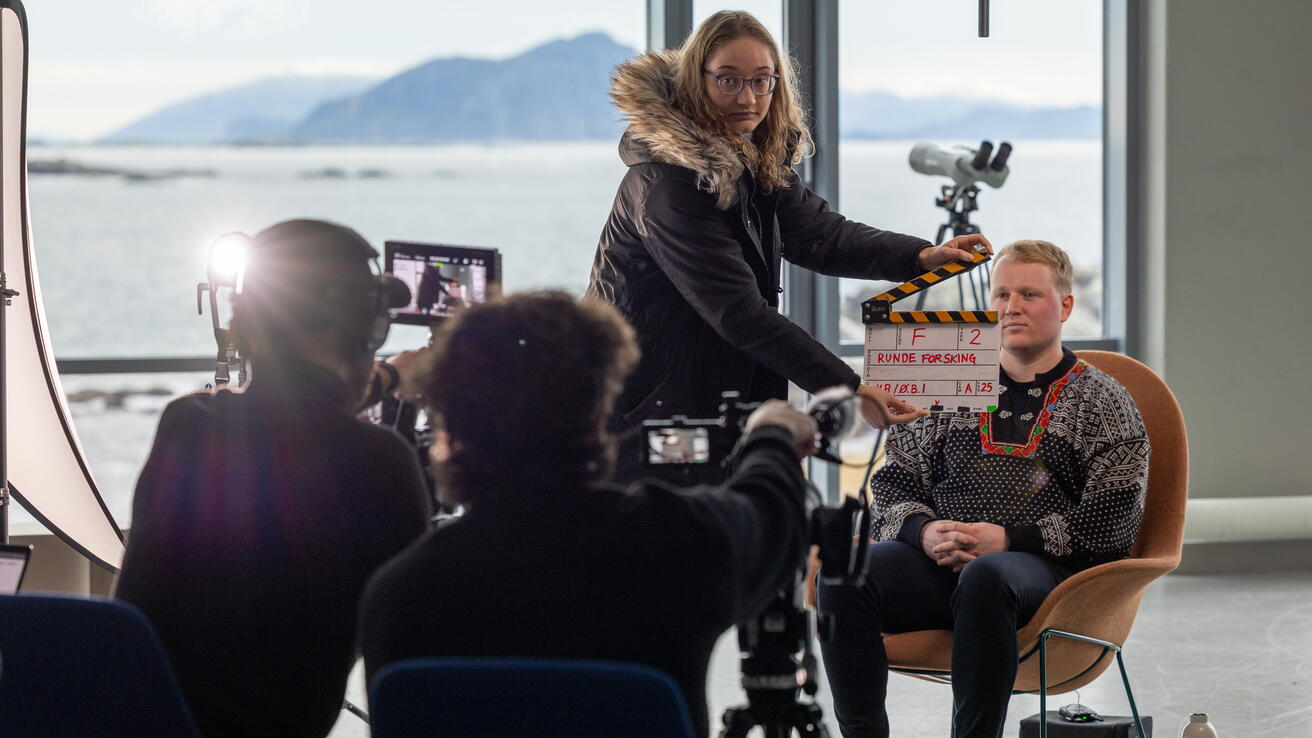
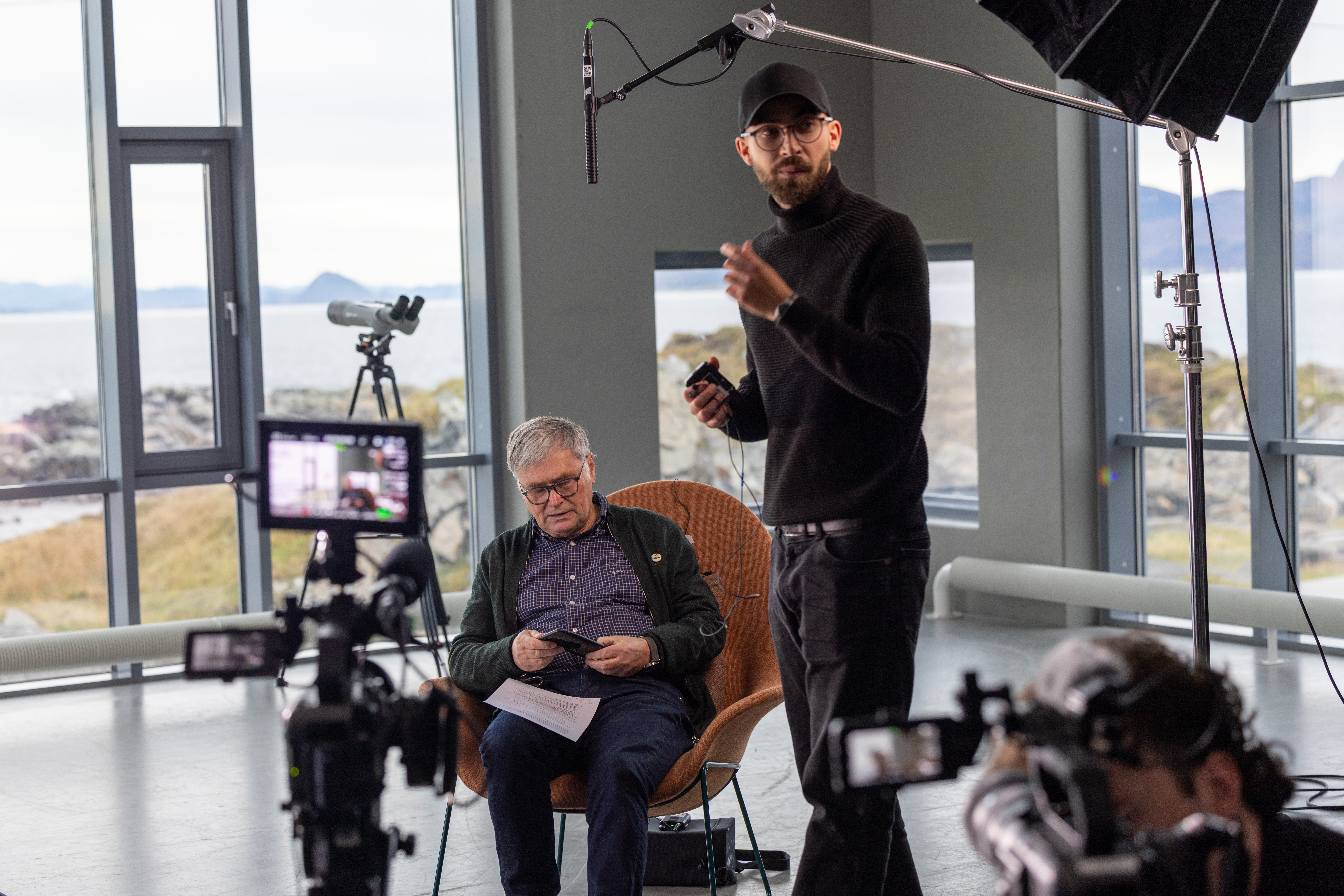
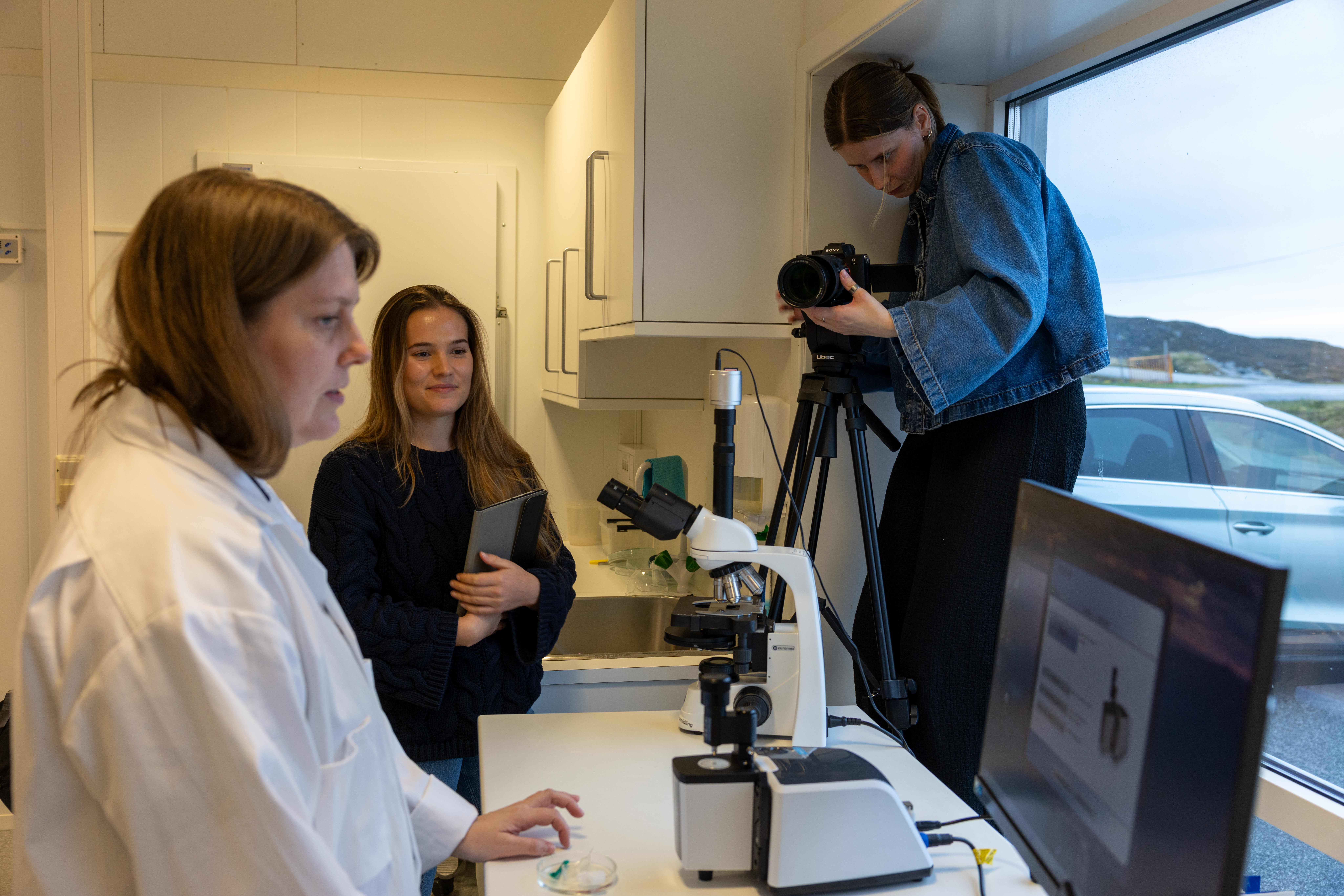
Veronika Teresa Blazejewski marks the take with a clapper. Researcher Ørjan Sørstrønen Vabø is ready for the interview. Vegard Sander Billing and Øyvind Bach Igland are behind the camera. Photo: Dag S. Roland.
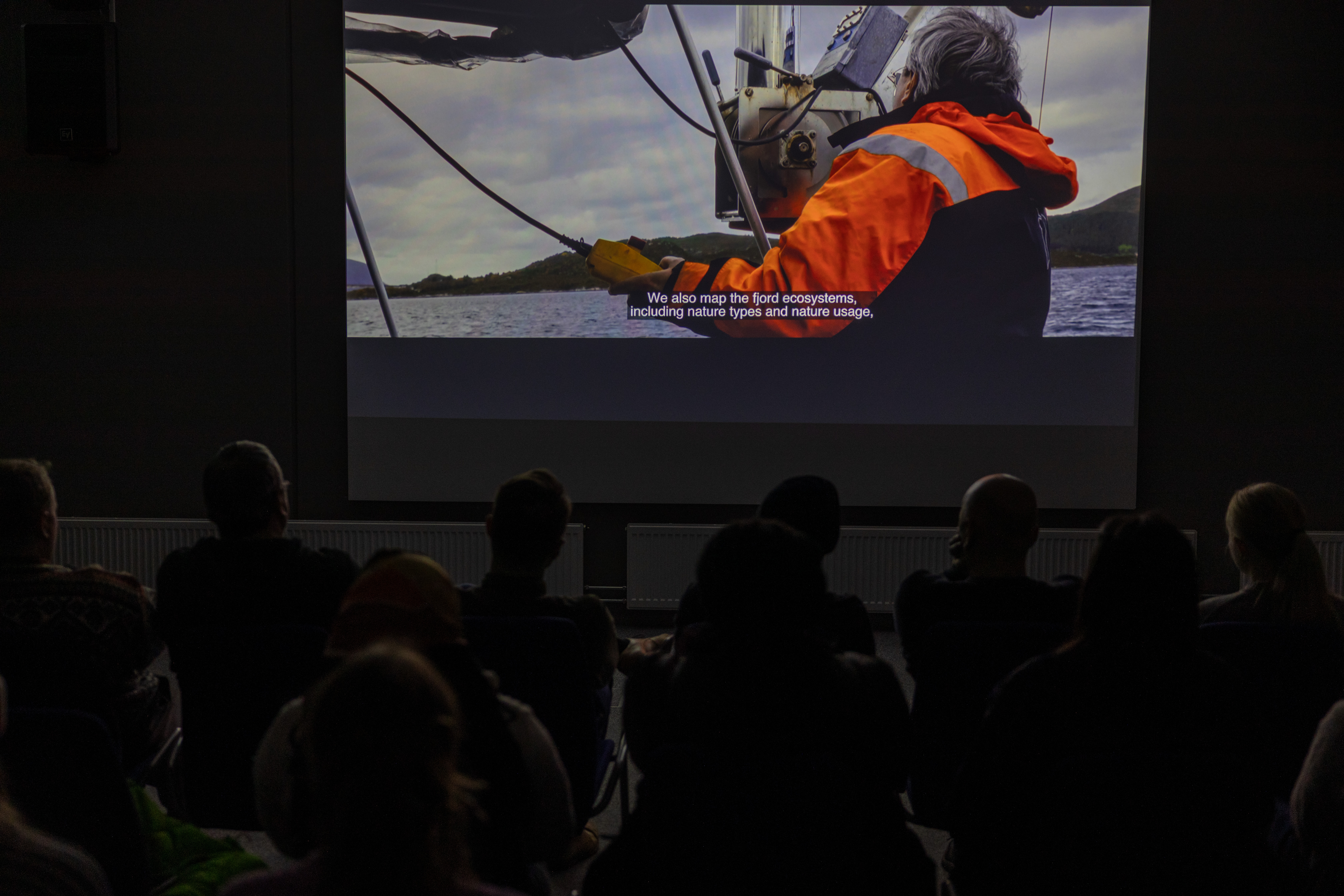
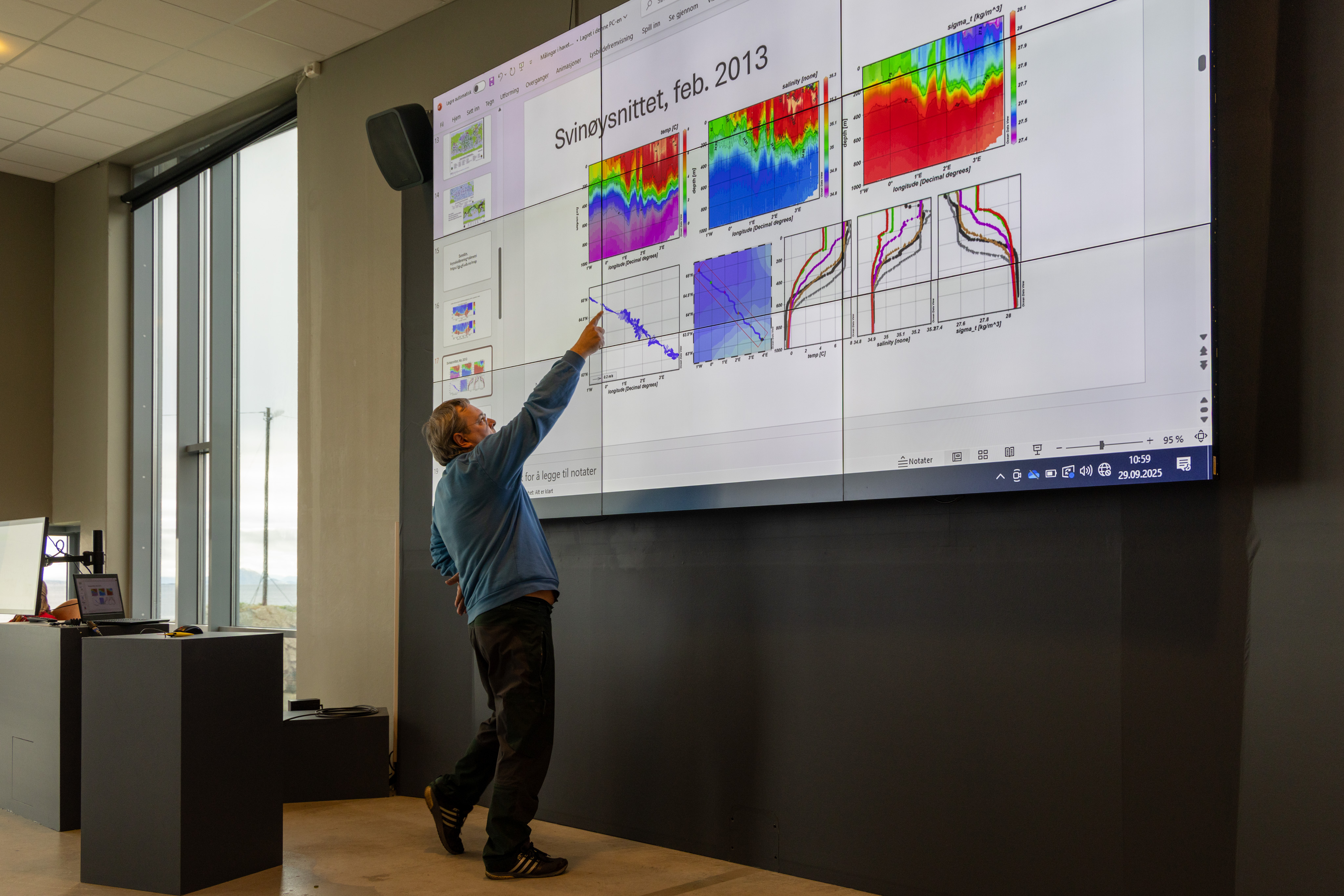
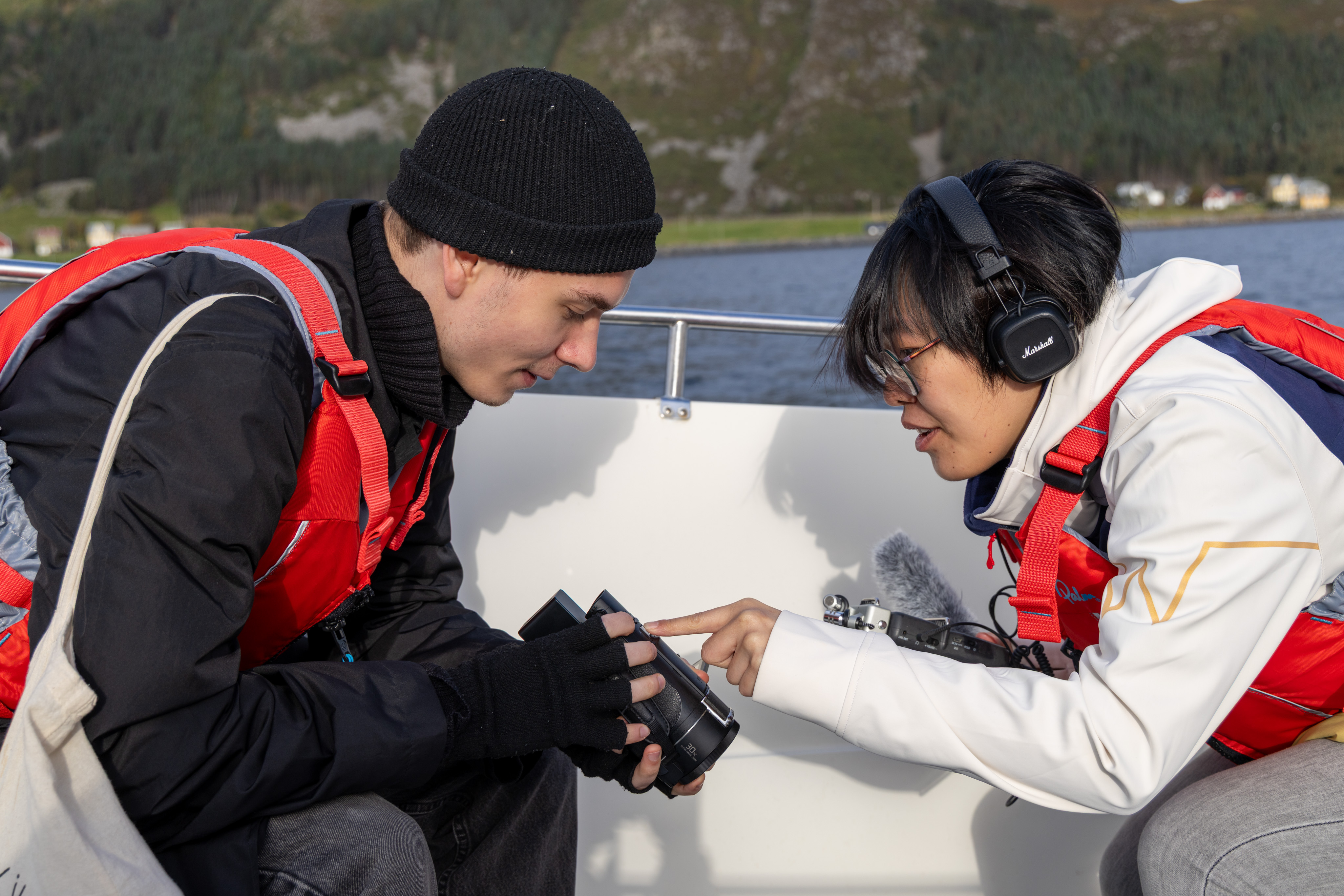
The project has provided both students and researchers with a rare insight into each other’s working methods – resulting in five completed films that aim to highlight the work at the research center.
The films were produced as part of the course MMP301 Storytelling in the Master in Media Practices program. Students worked in interdisciplinary groups across fields such as journalism, design, film and media production, communication, and animation.
Interdisciplinary collaboration from the first semester
Program coordinator Dag S. Roland explains that the project is part of the practical-theoretical approach that makes the program unique.
The two-year master’s program combines practical and theoretical components, allowing students to submit a combined practical and theoretical thesis.
“These are first-year students in their very first semester, and they are thrown straight into interdisciplinary collaboration. The workload has been heavy, but students still find this extremely valuable and a good preparation for professional life,” says Roland.
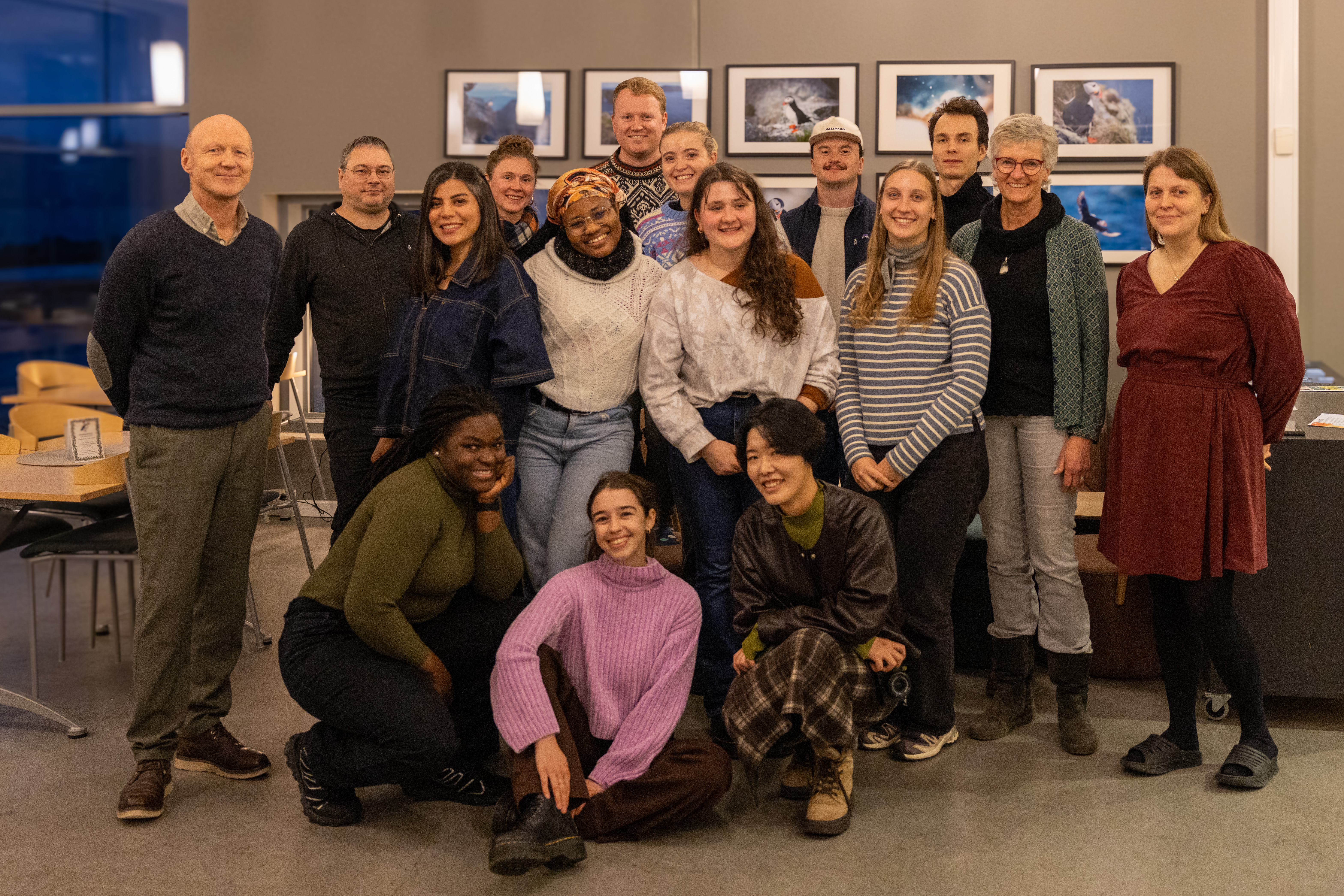
This year’s cohort includes both Norwegian and international students from countries such as China, Germany, Spain, the Netherlands, Iran, Russia, and Romania. About half of the students in the course are completing the full master’s degree in Volda, while the rest are international exchange students.
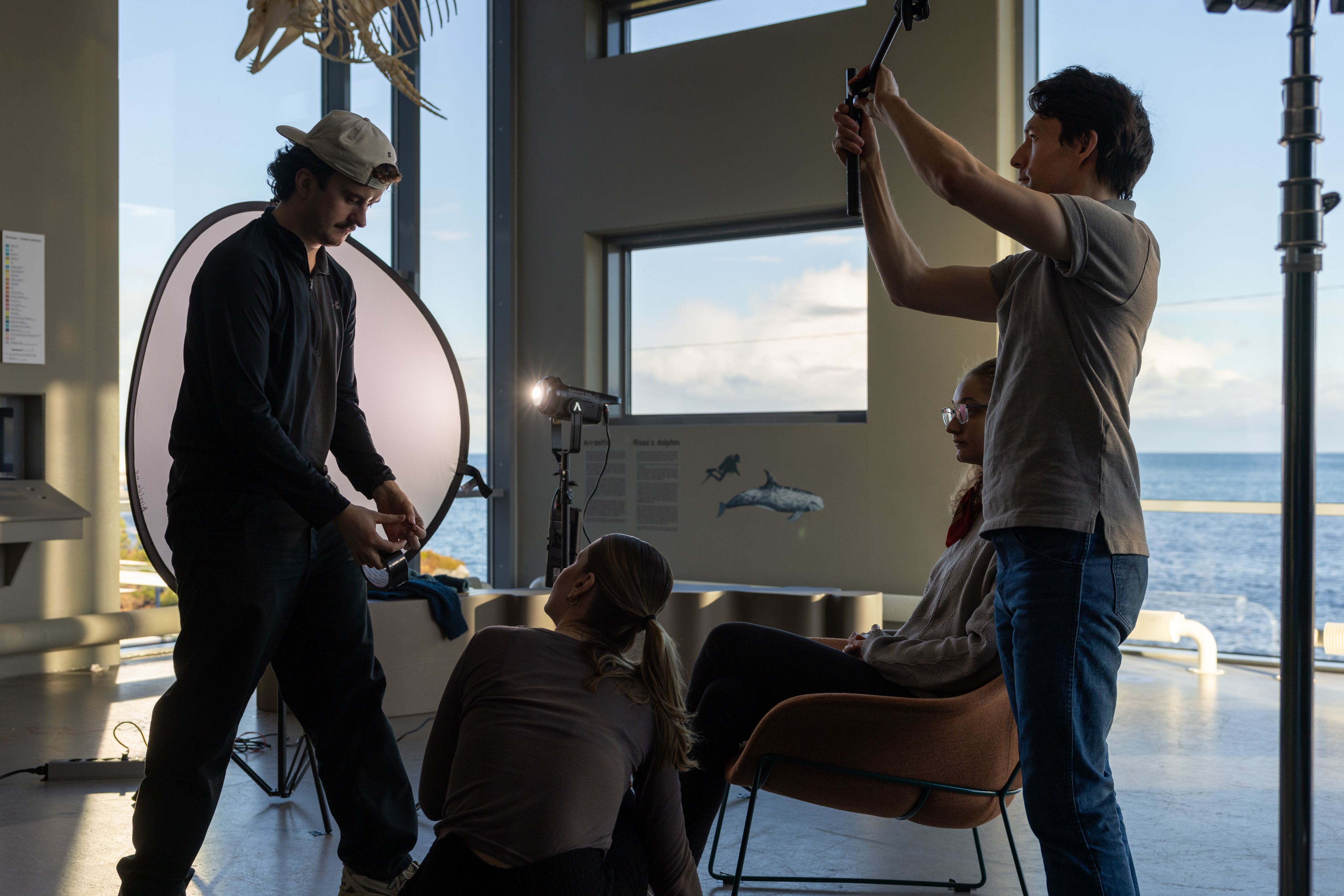
The final deliverables, submitted in December, include five films: one overall presentation of the institution and four films highlighting different research areas at Runde Research.
Roland believes the project reflects the core mission of the Faculty of Media and Journalism:
“This is right up our alley – both as research communication and as practice-oriented education. Together with the professional field, we are developing methods to meet future needs,” Roland explains.
“A great solution for us”
For Runde Research, the initiative came at a time when the institution had long wanted to become more visible to the public.
Managing Director Inge Bruheim explains that financial constraints have made professional profiling difficult:
“Since I started as managing director, I’ve often met people asking what we do, what topics we work on, and what we can offer. When Dag Roland reached out and offered his expertise and collaboration, it was an excellent solution for us,” says Bruheim.
Working with the students has provided the institution with valuable insights – not only into how to communicate its research but also how it is perceived by others.
“This has been a great learning process. We’ve become more aware of the content we present and how we place our research in a broader context. The students have impressed us both professionally and methodologically,” he says.
Bruheim hopes the films will help more people recognize the institution as a potential partner:
“We are small and often overlooked when larger research environments plan collaborations, for example for EU calls or Research Council of Norway projects. I expect more people will reach out in the future. In addition, this has been inspiring for our staff and given them valuable experience they truly appreciate,” Bruheim explains.
Storytelling as research communication
Project leader and researcher at Runde Research, Annelise Chapman, points out that the film project highlighted the need for a clearer strategic framework for communication:
“The students approached us with the same professionalism as if we were a corporate client, which made us realize that we first need to define what we want to communicate, to whom, and why. We had not worked systematically on this before,” says Chapman.
The collaboration also provided an important boost in how researchers can convey complex content:
“We see that we can become much better at telling stories around our research. The students helped us find a good balance between simplifying for understanding while still conveying nature’s complexity. They also encouraged us to work more consciously with pathos, ethos, and logos as tools in communication,” the project leader explains.
Chapman emphasizes that researchers often stand alone in communication work and that collaboration with academic environments like Volda University College can be crucial for conveying complex processes in a way that preserves both academic integrity and engagement.
The films will be important tools for recruitment, collaboration, and external communication:
“They show not only what we research but also our work environment, commitment, and the unique workplace we have. We hope they will spark curiosity and inspire more people to collaborate with us,” Chapman says enthusiastically.
Looking forward to further collaboration
Both Roland, Bruheim, and Chapman are clear that they want more collaboration in the future. Runde Research sees particular potential in projects that can develop new methods for effective research communication:
“It would be exciting to work further on communication aimed at a broad audience. There is much to gain here, and Volda University College has the expertise we need,” says Chapman.
Bruheim also points to opportunities for collaboration across departments at the college:
“Municipal planning and nature mapping in Storfjorden are examples of areas where cooperation can be expanded,” he says.
Roland emphasizes that projects like this are not only useful for students but also for the region:
“When research, communication, and education meet in a joint project, it creates value for all parties. We look forward to developing this further.”